
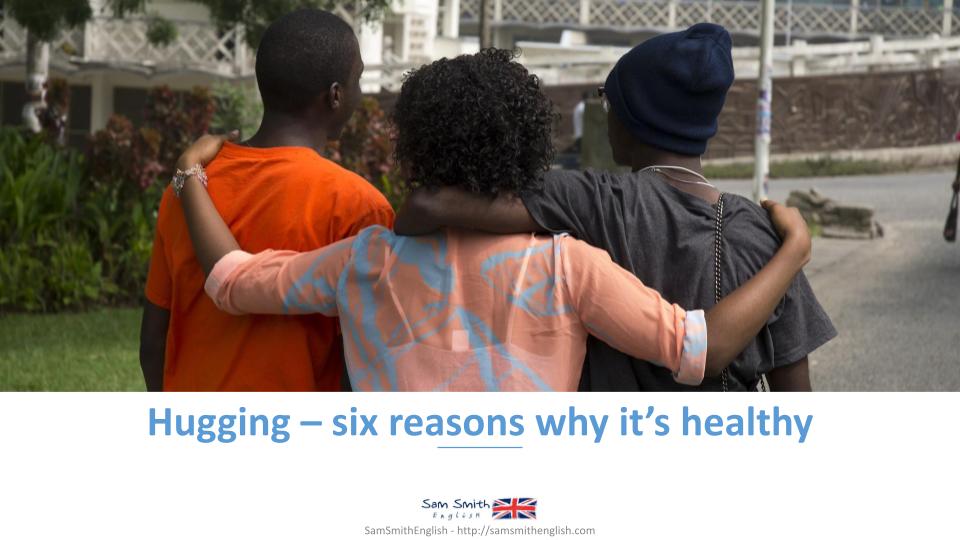
Hugging is considered to be one of the most important acts people can do to one another.
We hug for many reasons – when we are happy, when we are sad, and when we’re excited, but what makes us feel this need to put our arms around another person?
Do we do it because it’s human nature? Do we do it for emotional support?
Hugging has been proven to be not just comforting, but healthy as well.
Here are six of the health benefits that hugging offers:
1. Hugs help to lessen stress and anxiety.
Our natural reaction is to comfort someone if they are upset or experiencing something unpleasant. This is commonly done with a hug but it doesn’t only benefit the person being hugged.
Physical touch has a calming effect; it lowers stress levels both in the person receiving, and in the person giving the hug.
When you see someone you care about in pain or upset, it tends to have the same effect on you, but by hugging or holding them you can show that you sympathize and wish to offer relief. This often has the effect of calming both of you and helping both of you to relax.
Feeling another human’s touch can relieve stress and bring a sensation of peace, happiness, and content which all contribute toward mental health.
2. Hugging helps develop healthy brains
Children need to be hugged as they are growing up. Affectionate human contact, like hugs for instance, stimulate brain growth and positive sensory development.
Studies show that children who have grown up in environments where physical affection was not as commonly practiced, such as orphanages, face cognitive development issues and a lack of motor skills.
A study published by The Genetic Psychology Monographs demonstrated that a mere twenty extra minutes of physical touch via hugging caused infants to score higher in developmental assessments.
Over ten weeks, infants who were hugged less displayed significantly lower brain development.
That being said, only certain kinds of gentle and affectionate physical contact helped the brain develop, hugging being the most effective.
3. We need four hugs a day to survive
Children are not the only ones who need hugs for growth – adults do too.
Some studies even assert that unlimited hugs a day would be beneficial.
Family therapist, Virginia Satir, claims that hugs are essential for leading happy lives and even for existing.
She has famously been quoted as saying “We need four hugs a day for survival. We need eight hugs a day for maintenance. We need twelve hugs a day for growth.”
Four hugs a day might seem excessive to people with busy lives but hugs improve communication skills, build trust, and reduce stress – all of which are important factors in day to day life.
4. Hugs say what words can’t
Sometimes, words are not sufficient to express the comfort we want to give. Hugging is a form of communication that transcends the need for speech while providing connection and safety and linking back to our childhood development.
When parents hug their children, they are building bonds of trust. When you take a person into your arms, you are choosing to be close to them and to connect which is important in life.
The connection a hug provides can communicate many different messages; comfort, intimacy, and shared celebration – all through touch.
How long the hug lasts, how tightly you hold, and where you choose to touch all express different meanings.
A hug from a romantic partner with a hand around the waist can convey a far more intimate message than a hug around the chest from a co-worker.
Strong, all-encompassing hugs can sometimes represent joy or fervour while a soft hug while looking into the other’s eyes might be more romantic.
Hugs can be a healthy way to portray love, to give and receive comfort, and to communicate without needing to put feelings into words.
5. Hugging improves blood pressure
A study demonstrated that hugging can lower cardiovascular activity, thus helping to keep a heart in good shape.
The study consisted of 66 African American and 117 Caucasian couples who were romantic partners or co-habiting.
In the experiment, half of the couples held hands and hugged whilst watching a ten-minute romantic video. The other group were not allowed to make physical contact with their partners.
The couples who touched each other showed lowered blood pressure levels as they became calm and shared affection.
These results show that a warm relationship with a person you can relax with and whom you associate with a loving touch naturally lowers your blood pressure and makes you happier.
6. Hugs strengthen your immune system
Hugs release the hormone Oxytocin which reduces inflammation and encourages injuries to heal more quickly.
A study issued on December 19, 2014, monitored the effects of hugs on 404 healthy adults.
The results showed that people with stronger communities and friendship groups received more hugs and on a more regular basis on average.
Compared to others in the study, these people also had fewer and lighter symptoms of common colds while those who had less support and physical affection had more severe symptoms.
Overall, the conclusion was that those with supportive networks and lots of hugs tend to be less likely to get ill as their mental health and immune system have a boost.
And when they do fall sick, they, on average, heal more swiftly than those with less community.
Furthermore, when you hug, you expose yourself to mixed bacteria and germs. This naturally strengthens your immune system.
In conclusion
Hugging is a natural way of expressing a variety of feelings. These can include joy, sadness, love, or sympathy and all of these are important reasons for people to hug each other.
Expressing these emotions develops trust which leads to a more wholesome life.
Hugging is a vital part of our development and health.